
Global Events That Influence Currency Movements Every Day
Currency markets never truly stand still. Every hour, exchange rates respond to new information, reflecting changing expectations about economies, governments, businesses, and global events. What may seem like a minor announcement in one country can ripple across financial markets worldwide, influencing the value of multiple currencies within minutes.
Understanding what drives these daily movements is valuable for anyone interested in international finance, travel, investing, or global business. While no one can predict every market reaction, recognising the major forces behind currency fluctuations helps create a clearer picture of why exchange rates move and why certain events consistently attract worldwide attention.
Economic Indicators Shape Market Confidence
Economic reports are among the most influential drivers of currency movements. Data covering inflation, employment, economic growth, manufacturing activity, and consumer spending provide insight into the overall health of a country’s economy. Investors closely monitor these releases because they often influence expectations about future monetary policy.
When economic data exceeds expectations, confidence in a country’s economy generally increases. Strong employment figures or expanding economic output may encourage investment, increasing demand for that nation’s currency. Conversely, weaker-than-expected reports can reduce investor confidence, leading to declining currency values as capital shifts elsewhere.
Financial professionals, economists, and institutions around the world pay close attention to these indicators because they offer measurable evidence of economic performance. Although individual reports rarely tell the entire story, consistent trends often play a significant role in shaping long-term currency direction.
Central Banks Hold Significant Influence
Few institutions carry as much influence over currency markets as central banks. Organisations responsible for managing monetary policy make decisions on interest rates, inflation control, and financial stability, all of which affect the attractiveness of a country’s currency.
Higher interest rates can make a currency more appealing because investors may receive greater returns on assets denominated in that currency. Lower rates may have the opposite effect by reducing investment incentives. Markets often react not only to actual policy changes but also to speeches, meeting minutes, and forward guidance that hint at future decisions.
Anyone interested in forex trading quickly learns that central bank communications deserve careful attention. Market participants frequently analyse every statement for clues about future policy direction, recognising that even subtle changes in tone can trigger substantial movement across global currency markets.
Political Developments Create Uncertainty
Political events regularly influence investor confidence and market sentiment. Elections, leadership transitions, government policy changes, and international negotiations all have the potential to affect economic stability and future growth expectations.
Political uncertainty often increases market volatility. Investors generally prefer stable environments where government policies are predictable. When uncertainty rises, capital may move toward currencies considered relatively safer until conditions become clearer.
International organisations, financial analysts, and global businesses monitor political developments because government decisions influence taxation, trade policies, regulation, and international relationships. While political events do not always produce immediate currency changes, prolonged uncertainty can significantly affect exchange rates over time.
Read More: How to buy Bitcoin in 2023? Get guided step by step
Global Trade and International Relationships Matter
Modern economies are deeply connected through international trade. Countries that export more goods and services than they import often experience different currency pressures than those with persistent trade deficits. Trade balances can influence demand for currencies as businesses convert money to complete international transactions.
Trade agreements, tariffs, and supply chain disruptions also shape currency movements. Changes in trade policies may alter expectations about future economic growth, affecting investor confidence. Even negotiations between major economies can influence multiple currencies beyond those directly involved.
Businesses engaged in international commerce closely monitor these developments because exchange rate changes affect import costs, export competitiveness, and corporate profitability. As globalisation continues to connect markets, international trade remains one of the most consistent influences on daily currency activity.
Geopolitical Events and Market Sentiment
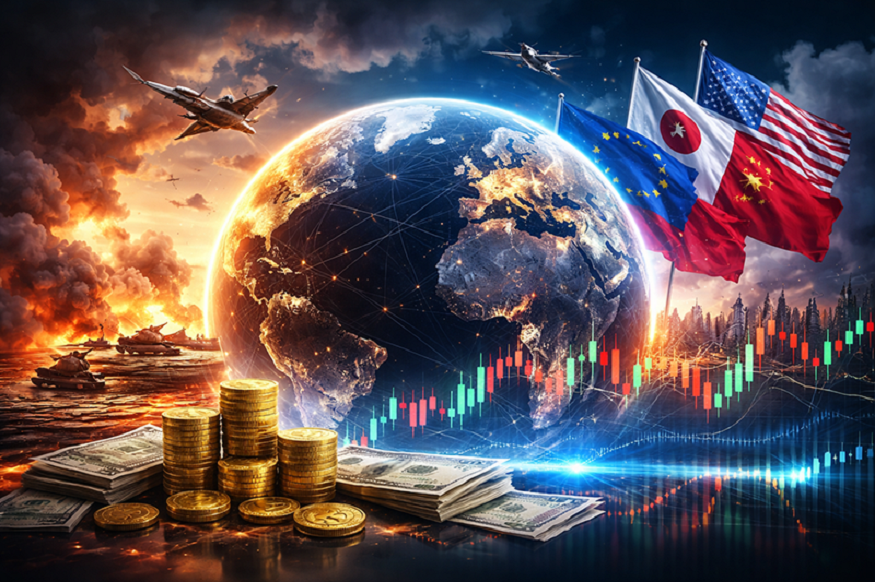
Geopolitical events frequently create rapid changes in financial markets. Military conflicts, diplomatic tensions, natural disasters, and regional instability can all increase uncertainty, encouraging investors to adjust their portfolios in response to evolving risks.
During periods of heightened uncertainty, investors often seek assets perceived as more stable. Certain currencies have historically benefited from this behaviour because they are associated with larger, more established economies. These shifts illustrate how market psychology can sometimes influence exchange rates as much as economic fundamentals.
Read More: How to Grow a Business: 7 Proven Tips for Success
Experts in international finance frequently emphasise that currency markets reflect both measurable economic conditions and investor expectations. Understanding this balance helps explain why similar geopolitical events can produce different market reactions depending on the broader economic environment.
Conclusion
Currency values are influenced by a combination of economic performance, monetary policy, political developments, international trade, geopolitical events, and broader financial market sentiment. These factors interact continuously, making the foreign exchange market one of the most dynamic financial environments in the world.
While no single indicator can explain every movement, understanding these major influences provides valuable context for interpreting daily market activity. By following global events with a balanced perspective and focusing on long-term patterns rather than isolated headlines, readers can develop a stronger appreciation for how interconnected today’s global economy has become.
